Project
Invisible Egg
An interactive kinetic sculpture that projects an invisible egg-shaped volume using ultrasonic sensors and light





Overview
The Invisible Egg is an interactive installation created for The Big Egg Hunt, a London-wide urban art exhibition supporting children's charities. Rather than decorating a physical egg, we explored a more conceptual approach: defining an egg-shaped volume in space through information rather than matter.
Exhibited at the British Film Institute, the piece challenges how we perceive and recognize objects, demonstrating that it's sufficient to imagine an object to derive meaning from its presence.
The Concept
When Maximo Riadigos and I first heard of The Big Egg Hunt, we started exploring ideas that aligned with our shared enthusiasm for interaction design. We asked ourselves: what if an egg-shaped object exists only in our mind's eye?
The core idea: An egg shape is only recognized as such through perception. The Invisible Egg defines a form in space with information instead of matter, a structure that projects an invisible egg-shaped volume around itself and lights up when someone "touches" it.
How It Works
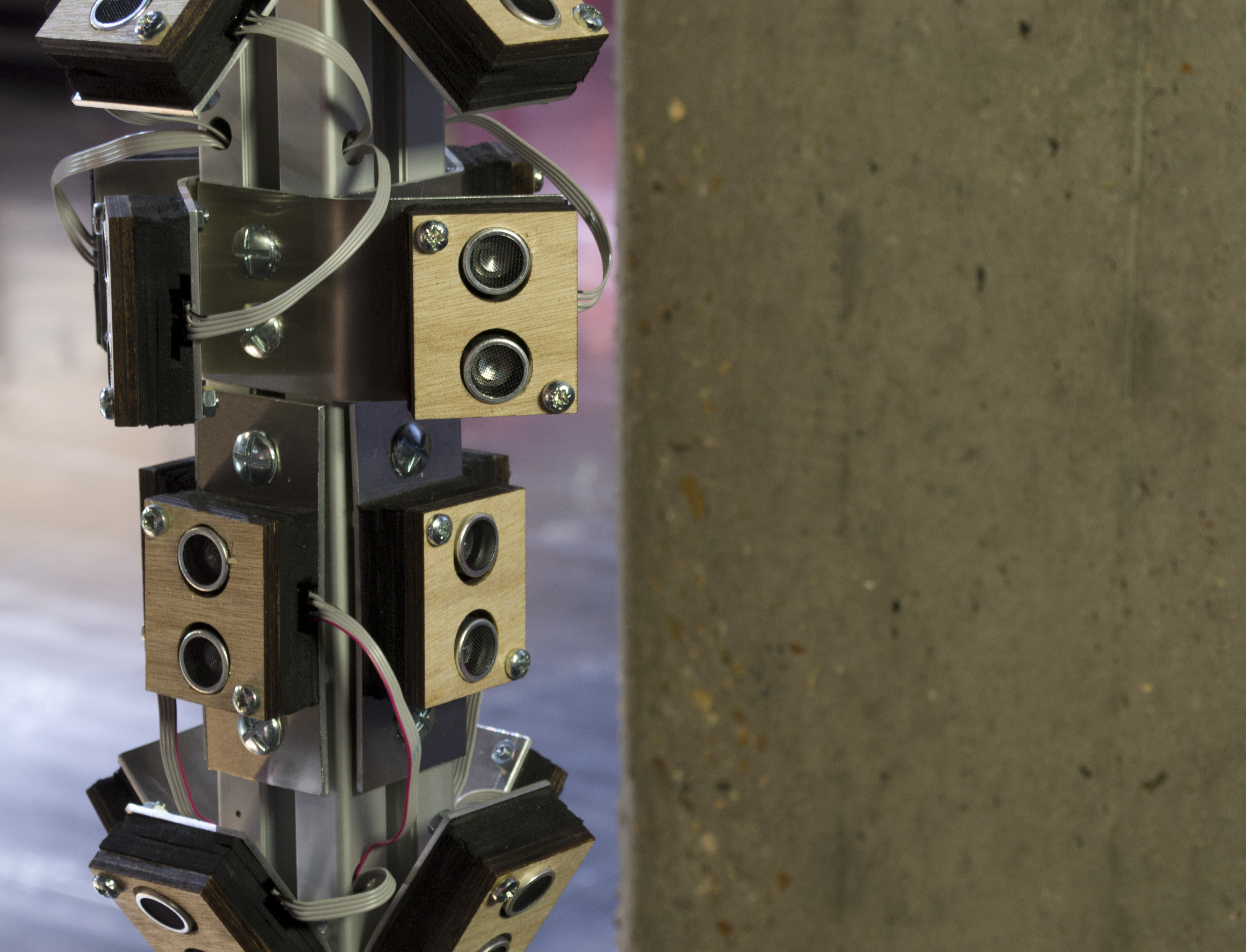
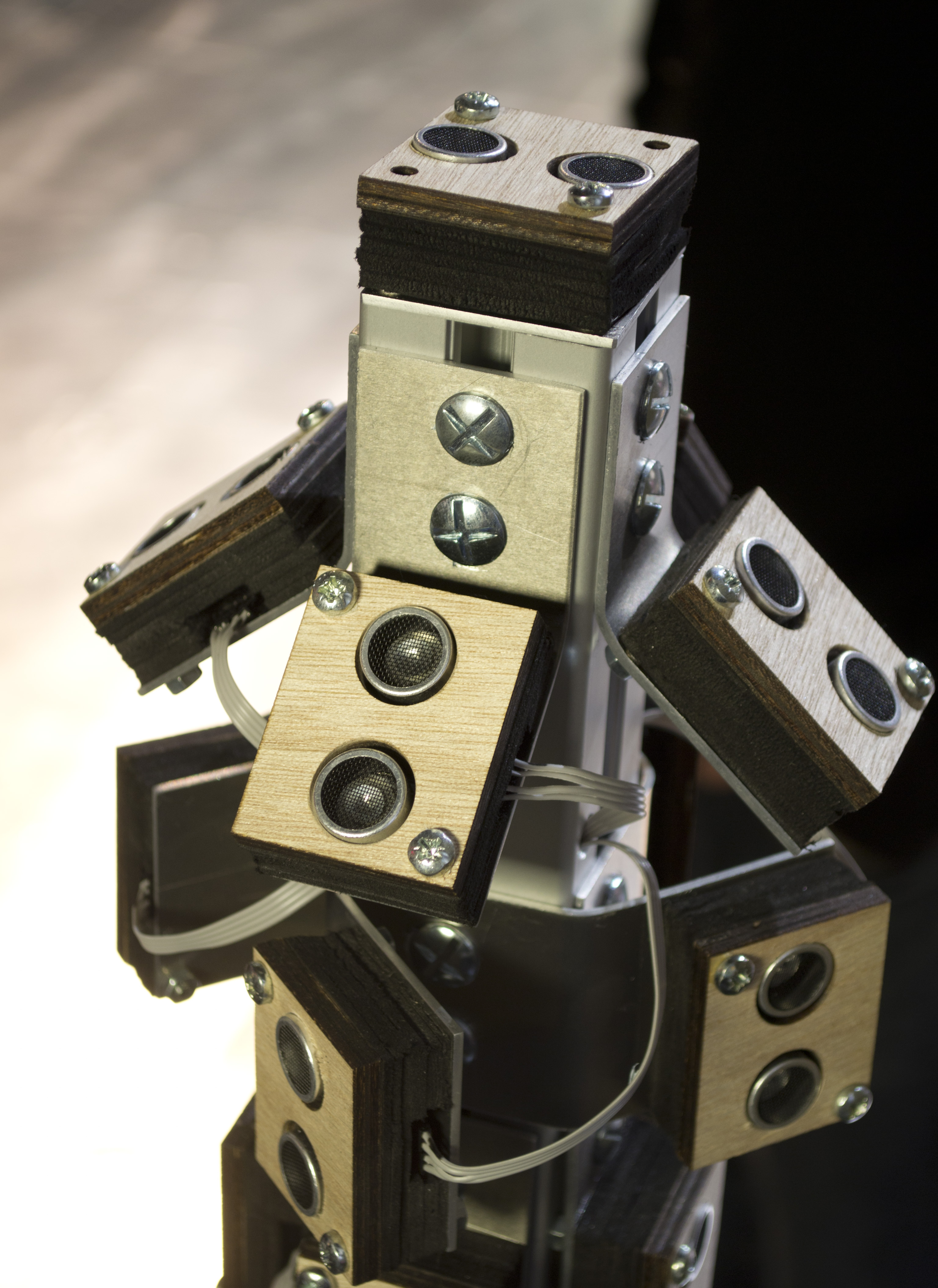
The structure is sensitive to its immediate surroundings through 17 ultrasonic sensors mounted on it. These sensors continuously measure the distance to nearby objects and people, creating an invisible egg-shaped detection volume around the central structure.
Technical components:
- 17 ultrasonic distance sensors arranged to define an egg-shaped volume
- Arduino Mega microcontroller processing sensor data in real-time
- Custom programming to detect boundary crossings
- LED lighting system that responds to interactions
- Power supply system accepting both mains and battery power for exhibition flexibility
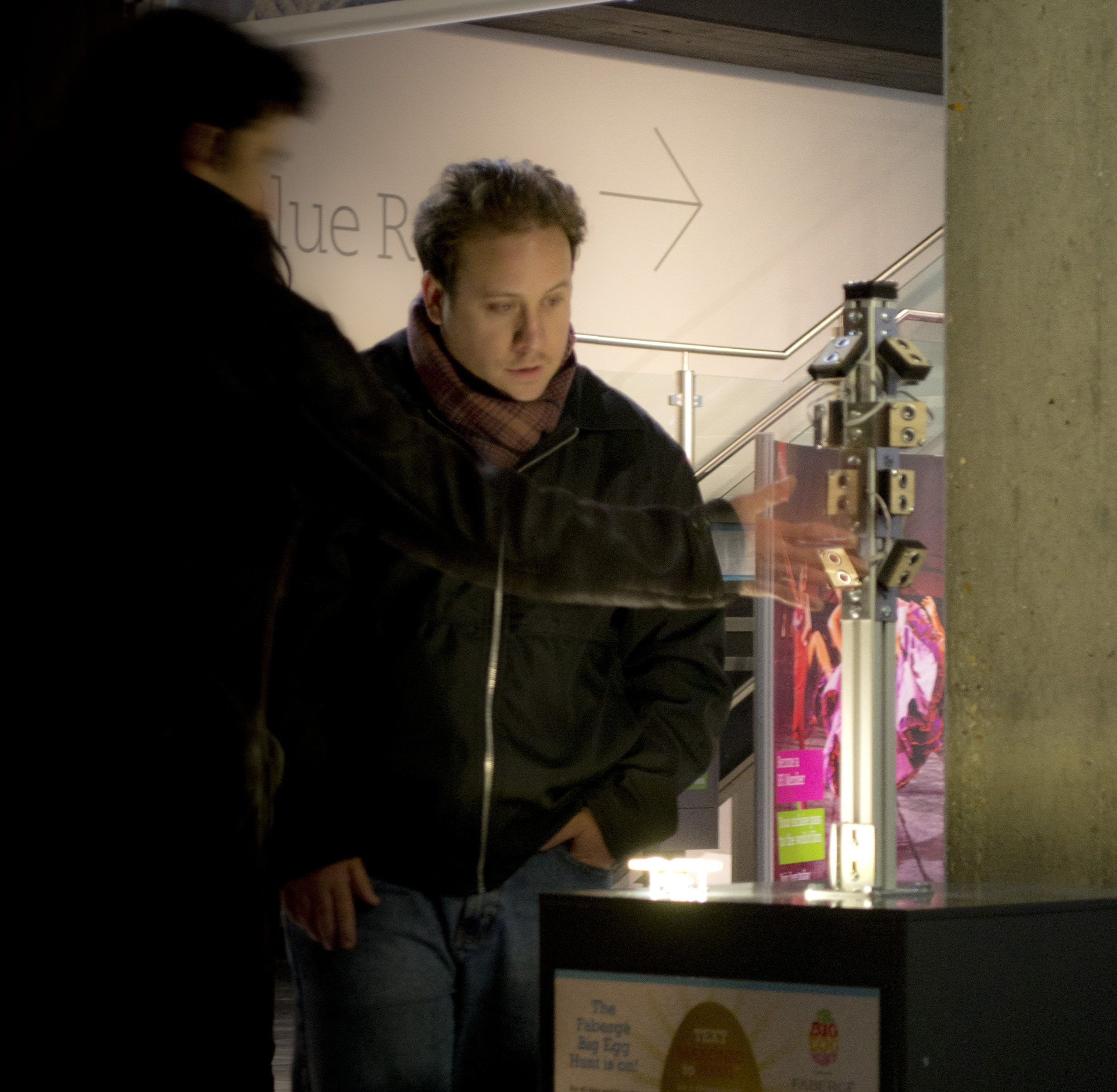
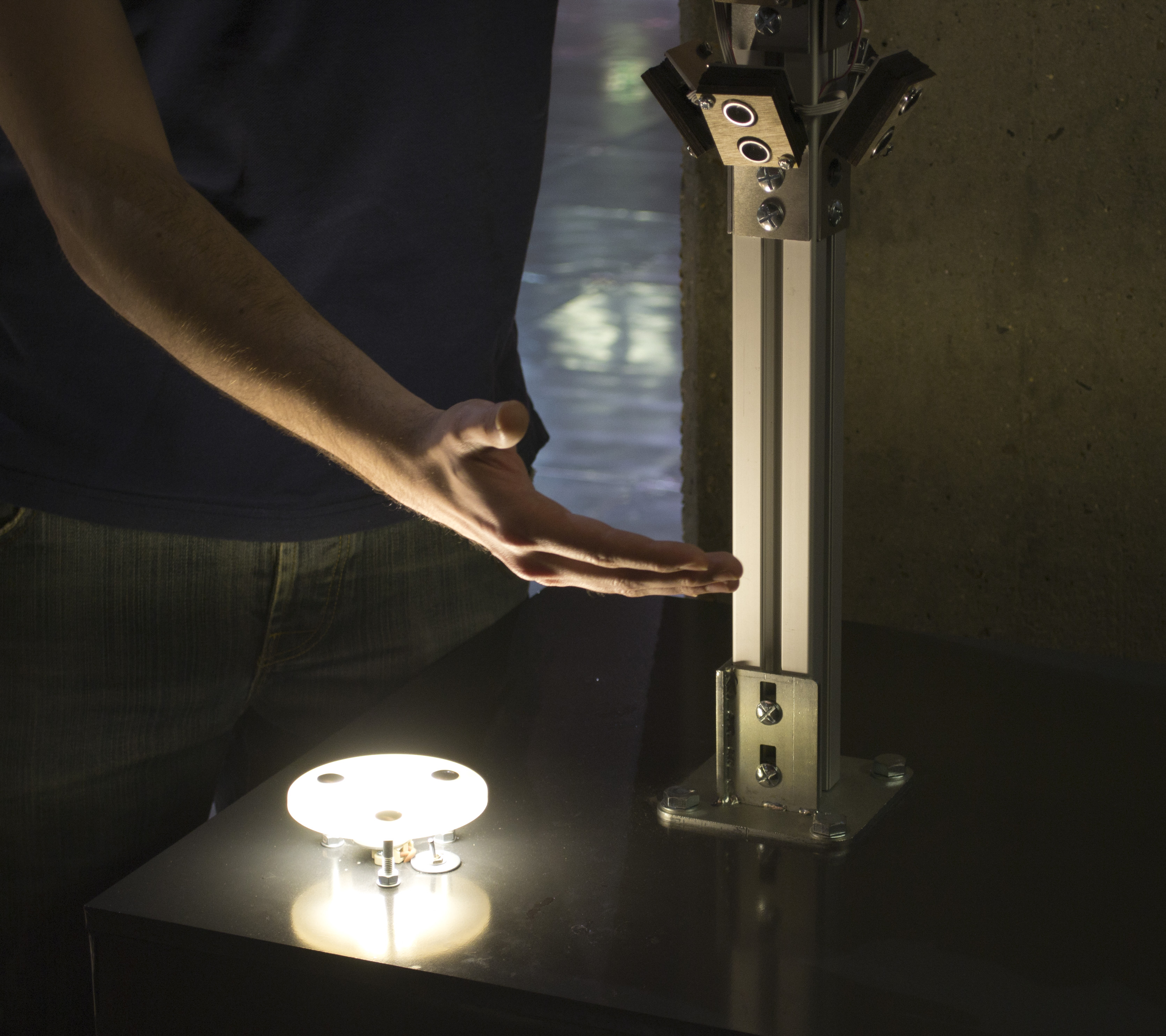
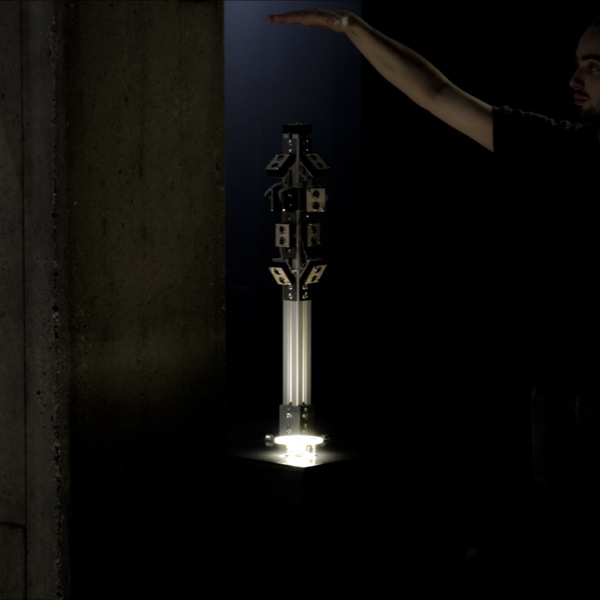
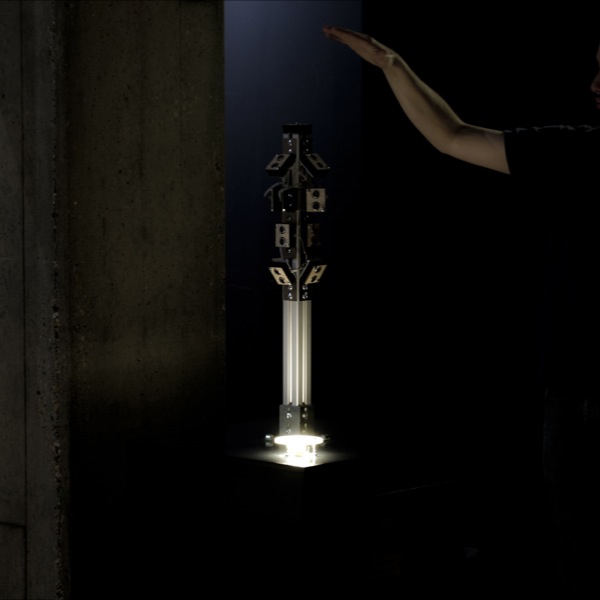
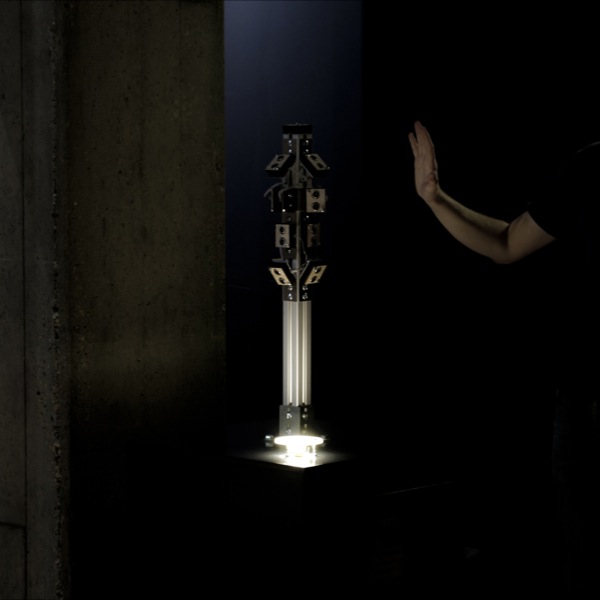
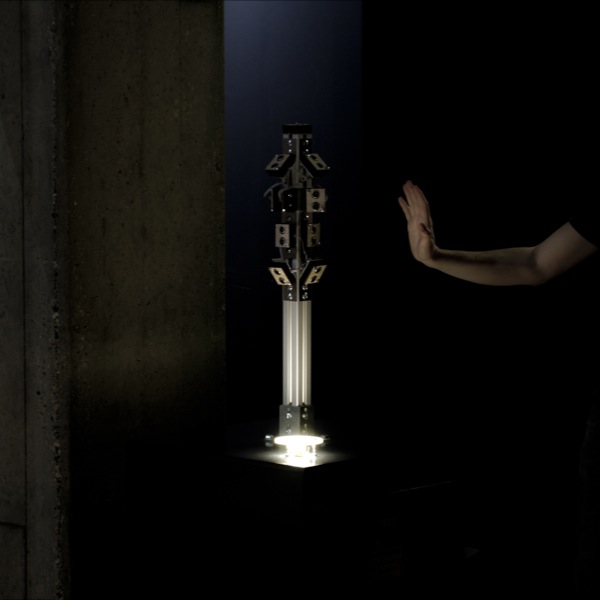
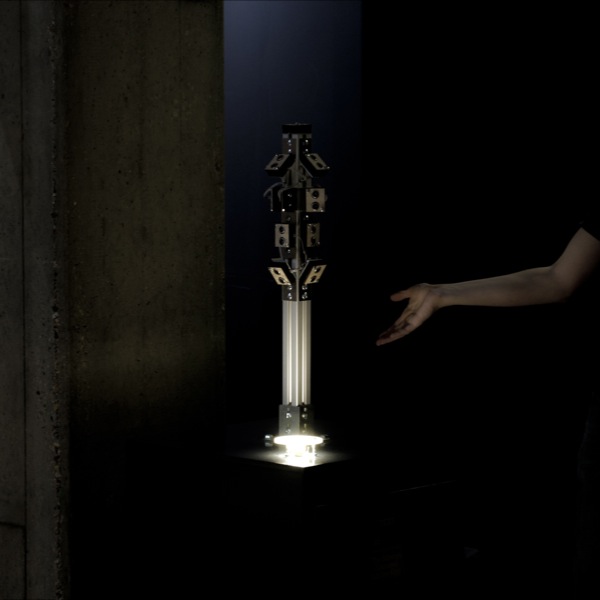
When someone crosses the invisible boundary:reaching into the egg-shaped volume:the sensors detect the intrusion and trigger the lighting system, making the invisible boundary momentarily visible through light.
06 Interaction sequence - visitor discovering the invisible egg boundary


Design & Fabrication
The physical structure serves as a minimal armature for the sensor array, deliberately understated to emphasize the invisible volume it projects. We designed the piece to be:
- Visually minimal: The structure doesn't compete with the invisible volume it defines
- Technically robust: Exhibition-ready with reliable sensor operation over extended periods
- Intuitively interactive: People naturally explore the space around it, discovering the invisible boundary through experimentation
- Inexpensive to fabricate: Fabricated from off-the-shelf alluminium components and easy to replace electronic components.
Outcome & Impact
The Invisible Egg successfully participated in The Big Egg Hunt, with is sale at auction contributing to fundraising for Action for Children and Elephant Family charities. Beyond its charitable purpose, the piece demonstrated that:
- Interactive technology can create poetic experiences, not just functional interfaces
- Invisible boundaries can be as tangible as physical ones when properly signaled
- Minimal physical form can define powerful spatial experiences
- Sensor technology enables playful exploration of perception and imagination
What I learned:
Working on the Invisible Egg taught me that the most engaging interactions often emerge from simple concepts. 17 sensors and some lights created something memorable because the idea was clear and the execution reliable. I learned that exhibition installations require different thinking than prototypes; robustness matters as much as innovation when something needs to work unsupervised for weeks. The project reinforced my belief that technology serves experience best when it becomes invisible itself, leaving only the interaction visible. Finally, watching people discover the invisible boundary reminded me that good interaction design creates moments of delightful surprise:not through complexity, but through thoughtful simplicity.
Get in touch for more information or to book a consulation.
Contact MeMore


Project
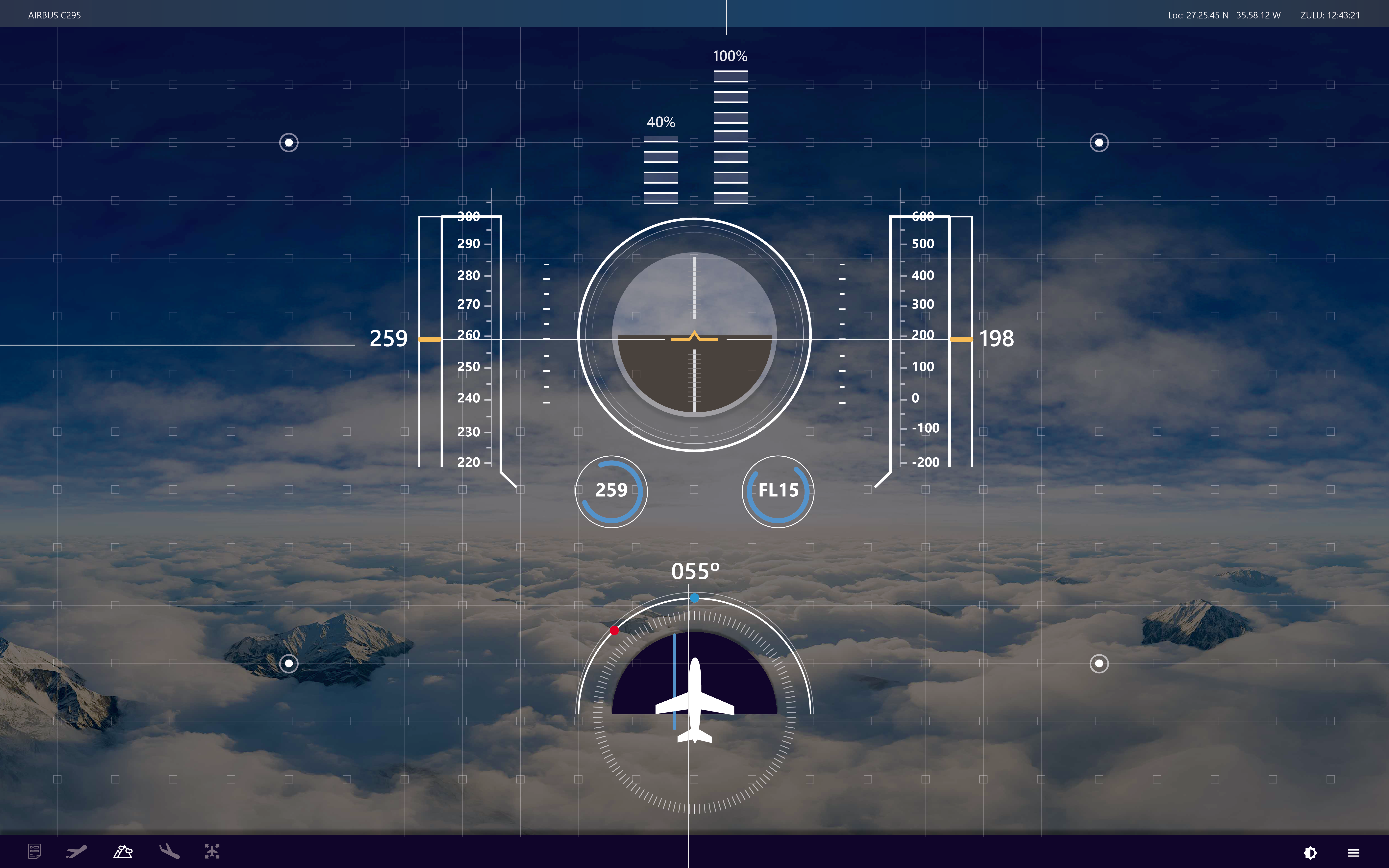
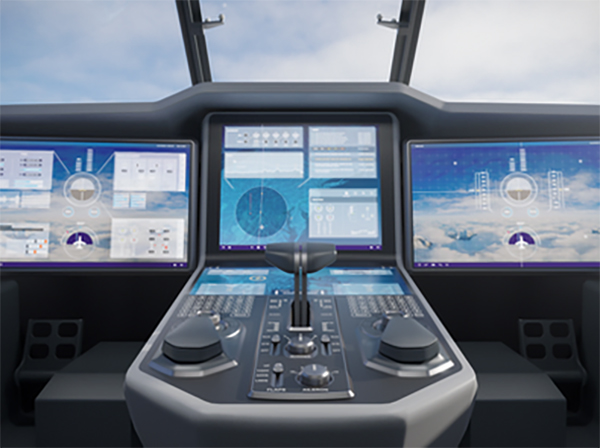
Clean Sky 2 - Next Generation Cockpit
Reducing pilot cognitive load through adaptive interface design for a potential civilian Airbus C295
Reducing pilot cognitive load through adaptive interface design for a potential civilian Airbus C295
See Project